 24 Aug, 2026
 By Admin
Best Time to Visit Varanasi: Month-by-Month Guide
 Blog
Blog
Planning a trip to Varanasi and wondering when is the best time to visit Varanasi? The answer depends on what you want from your trip—pleasant weather, temple visits, Ganga Aarti, sunrise boat rides, festivals, photography, or a quieter experience.
Varanasi, also known as Kashi or Banaras, can be visited throughout the year. However, October to March is generally considered the most comfortable period for sightseeing, with cooler weather making it easier to explore the ghats, temples, old city lanes, and nearby attractions.
This Varanasi month-by-month travel guide will help you choose the right time for your trip.
Quick Answer: What Is the Best Time to Visit Varanasi?
For most travelers, October to March is the best time to visit Varanasi.
- Best overall: October to March
- Best for pleasant weather: November to February
- Best for festivals: October to March
- Best for Dev Deepawali: November, depending on the lunar calendar
- Best for sunrise boat rides: October to March
- Best for photography: October to February
- Best for fewer crowds: April to June and parts of the monsoon
- Hottest period: April to June
The official Incredible India tourism portal also recommends October to March as the most pleasant period for exploring Varanasi.
Varanasi Weather at a Glance
Varanasi experiences hot summers, a monsoon season, and cooler winters. Average temperature ranges listed by Incredible India show how dramatically conditions can change through the year—for example, May can reach around 45°C, while December temperatures can fall to around 6°C.
| Month | Typical Weather | Best For |
|---|---|---|
| January | Cold mornings, pleasant afternoons | Temples, boat rides, sightseeing |
| February | Pleasant and comfortable | Sightseeing, photography |
| March | Warm, festive | Holi, cultural experiences |
| April | Hot | Budget travel, shorter sightseeing |
| May | Very hot | Budget travelers |
| June | Hot with increasing humidity | Low-season travel |
| July | Monsoon | Quiet experiences |
| August | Humid and rainy | Fewer crowds |
| September | Warm with improving weather | Budget travel |
| October | Pleasant, festive | Excellent overall |
| November | Pleasant to cool | Dev Deepawali, sightseeing |
| December | Cool, atmospheric | Winter travel, photography |
January: Cold, Peaceful and Atmospheric
January is one of the coolest months in Varanasi. Early mornings can be chilly, especially around the Ganga, while afternoons are generally more comfortable for sightseeing.
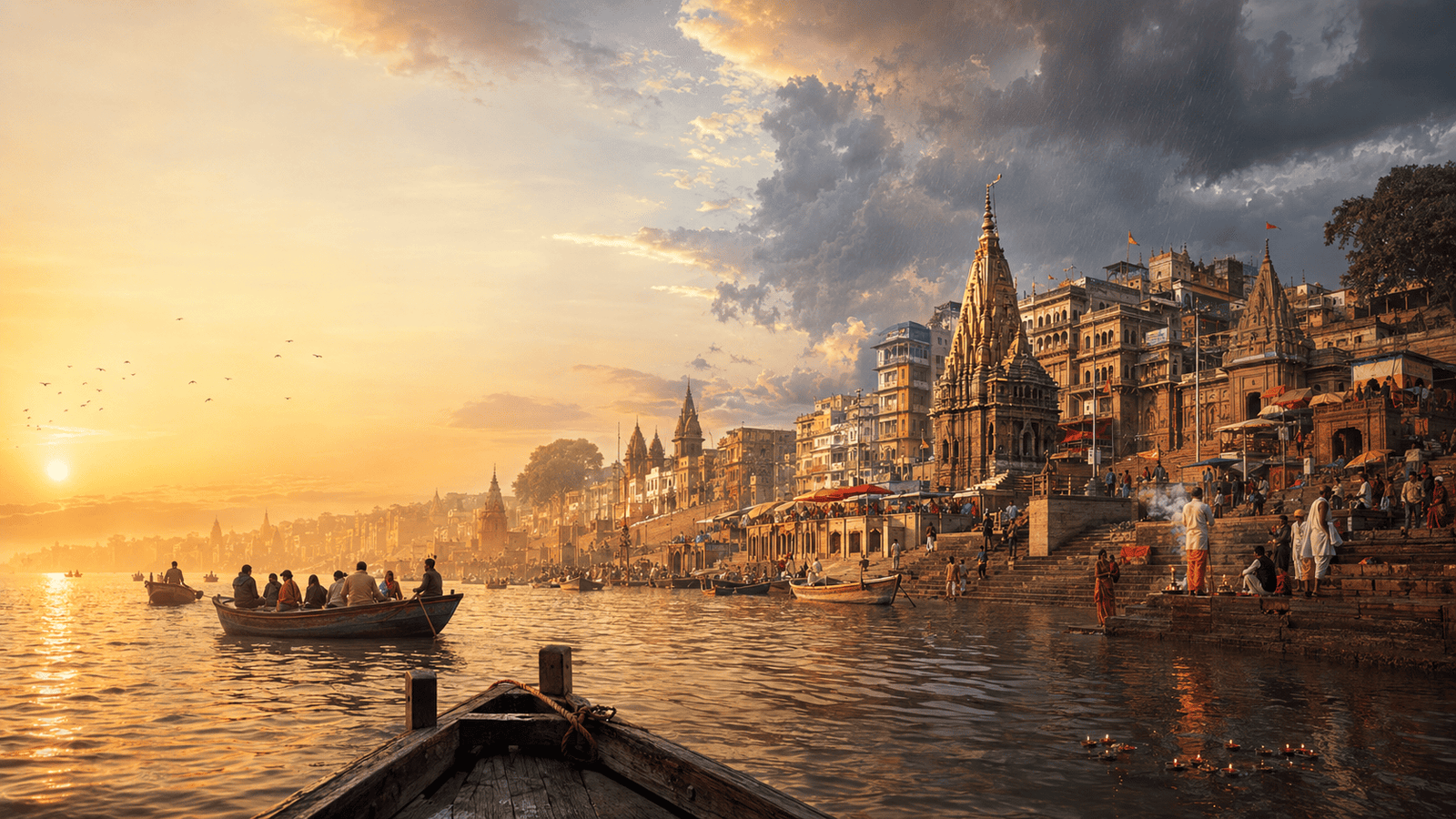
This is a beautiful time for a sunrise boat ride in Varanasi. Winter fog can create a magical atmosphere over the river and ghats.
Why Visit in January?
- Cool weather
- Beautiful sunrise boat rides
- Comfortable daytime sightseeing
- Excellent photography conditions
- Peaceful winter atmosphere
Things to Keep in Mind
Carry warm clothes, especially if you plan to take an early morning boat ride or visit the ghats before sunrise.
February: One of the Best Months to Visit Varanasi
February offers a comfortable balance of cool mornings and pleasant daytime temperatures. It is an excellent month for first-time visitors who want to explore temples, ghats, markets, and Sarnath without extreme heat.
Best Experiences in February
- Kashi Vishwanath Temple
- Ganga Aarti
- Sunrise boat ride
- Old city walking tour
- Sarnath sightseeing
- Banarasi food and shopping
If you want comfortable sightseeing without the intense summer heat, February is an excellent choice.
March: Warm Weather and Festival Energy
March marks the transition from winter to summer. Temperatures begin rising, but the month can be particularly exciting because of the festive atmosphere.
If your trip coincides with Holi, Varanasi offers a vibrant cultural experience. However, festival periods can also mean larger crowds, so plan accommodation and transportation in advance.
Why Visit in March?
- Festival atmosphere
- Cultural experiences
- Comfortable mornings
- Good sightseeing conditions
- Great opportunity to experience Holi in Kashi
April: Summer Begins
April brings noticeably warmer weather to Varanasi. Daytime temperatures can become uncomfortable, particularly during the afternoon.
If you’re visiting in April, plan your sightseeing around the cooler parts of the day.
Travel Tip
Start your day early with a boat ride or temple visit, take a break during the afternoon, and continue sightseeing in the evening.
April can also be attractive for travelers looking for lower-cost Varanasi tour packages compared with peak-season travel.
May: The Hottest Month
May is generally one of the hottest months in Varanasi. Official tourism data lists average temperature ranges reaching above 45°C during this period.
For most travelers, May isn’t the ideal month for extensive outdoor sightseeing.
However, if you need to travel during May, you can still enjoy Varanasi by planning carefully.
Tips for Visiting Varanasi in May
- Avoid afternoon sightseeing
- Start your day early
- Carry plenty of water
- Wear lightweight clothing
- Use comfortable footwear
- Plan indoor activities during peak heat
- Attend the evening Ganga Aarti
June: Hot and Humid
June remains hot, although the weather begins transitioning toward the monsoon.
This is generally a quieter period for tourism, making it potentially attractive for travelers looking for fewer crowds and lower-season travel options.
Is June a Good Time to Visit?
June can work if your priority is budget travel and fewer crowds, but it isn’t the best choice for travelers who want comfortable weather.
July: Monsoon in Varanasi
July brings monsoon conditions and increased humidity. Rain can add a different character to the city, with the Ganga and ghats taking on a dramatic appearance.
Outdoor plans can be affected by rain, so keep your itinerary flexible.
Why Visit During Monsoon?
- Fewer tourists
- Different views of the Ganga
- Potentially better travel deals
- Atmospheric photography
- Quieter sightseeing
August: Rain, Humidity and Fewer Crowds
August continues the monsoon season. Rainfall and humidity can make walking around the old city less predictable.
However, travelers who don’t mind occasional rain can enjoy a more relaxed experience compared with the peak tourist season.
Travel Tip
Keep an umbrella or rain jacket with you and allow extra time for transportation.
September: Transition Toward Better Weather
September generally marks the transition from monsoon toward the more comfortable travel season.
The weather may still be warm and humid, but conditions gradually improve as October approaches.
This can be a good option for travelers seeking a quieter experience before the peak season begins.
October: The Beginning of Peak Travel Season
October is one of the best months to visit Varanasi.
The weather becomes more comfortable, making it easier to explore the ghats, temples, markets, and narrow lanes of the old city. Incredible India also identifies October to March as the most pleasant period for visiting Varanasi.
Why Visit Varanasi in October?
- Pleasant sightseeing weather
- Comfortable boat rides
- Beautiful evenings
- Festival season begins
- Excellent photography
- Ideal for family trips
October is a particularly good month for travelers planning their first trip to Varanasi.
November: Dev Deepawali and the Magic of Kashi
November is arguably one of the most spectacular times to visit Varanasi, especially if your trip coincides with Dev Deepawali.
During the festival, thousands of diyas illuminate the ghats, creating an extraordinary scene along the Ganga. The exact date changes each year because the festival follows the Hindu lunar calendar.
Why November Is Special
- Dev Deepawali
- Pleasant weather
- Beautiful Ganga views
- Excellent photography
- Festive atmosphere
- Comfortable sightseeing
Important: Dev Deepawali attracts very large crowds, so hotels, transportation, boat rides, and tours should be planned well in advance.
December: Cool Weather and Winter Charm
December brings cooler temperatures and is another excellent month for visiting Varanasi.
Early mornings can be cold, but the winter atmosphere adds a unique charm to sunrise boat rides and the ghats.
Why Visit in December?
- Pleasant daytime weather
- Beautiful winter mornings
- Excellent photography
- Comfortable sightseeing
- Perfect for temple and cultural tours
Pack warm clothing if you’re planning early morning activities.
Best Time for a Varanasi Boat Ride
The October to March period is particularly comfortable for early morning boat rides because temperatures are generally more pleasant.
A sunrise boat ride lets you see the ghats from the Ganga as the city wakes up. You may see devotees performing rituals, priests offering prayers, and boats moving along the river.
For the best experience, book a boat ride early in the morning and carry an extra layer during winter.
Best Time for Ganga Aarti
The Ganga Aarti at Dashashwamedh Ghat takes place every evening and is a year-round experience. The official tourism portal describes Dashashwamedh Ghat as one of the city’s key locations for experiencing the ceremony.
For comfortable travel, October to March is a great period to combine:
- Sunrise boat ride
- Temple visits
- Old city exploration
- Evening Ganga Aarti
Best Time to Visit Kashi Vishwanath Temple
Kashi Vishwanath Temple can be visited throughout the year. However, the cooler months from October to March are generally more comfortable for combining temple visits with wider sightseeing around Varanasi.
If you’re visiting during major festivals or peak pilgrimage periods, expect larger crowds and plan your visit accordingly.
Best Time to Visit Varanasi for Photography
If photography is one of your priorities, consider October to February.
Winter mornings can produce atmospheric scenes over the Ganga, while the golden light around sunrise and sunset beautifully illuminates the historic ghats.
Some of the best photography experiences include:
- Sunrise from a boat
- Assi Ghat in the morning
- Dashashwamedh Ghat at sunset
- Ganga Aarti
- Banarasi street scenes
- Old city lanes
- Dev Deepawali
Best Time for a Family Trip to Varanasi
For families, October to March is generally the most comfortable period.
The cooler weather makes it easier for children and older travelers to explore temples, ghats, Sarnath, and other attractions without dealing with extreme summer heat.
A 2–3 day itinerary can include:
Day 1
Kashi Vishwanath Temple → Old City → Ganga Aarti
Day 2
Sunrise Boat Ride → Assi Ghat → Sankat Mochan → Sarnath
Day 3
BHU → Local Shopping → Additional Temples or Nearby Attractions
Best Time for a Budget Varanasi Trip
If your main priority is keeping travel costs lower, consider the summer or monsoon months, when visitor demand can be lower.
However, cheaper travel may come with a trade-off in weather comfort.
A good strategy is to travel during the shoulder periods around September–October or March–April, depending on the weather and your flexibility.
Best Time to Visit Varanasi for Festivals
Varanasi becomes especially vibrant during its major religious and cultural celebrations.
Some notable occasions include:
- Dev Deepawali
- Mahashivratri
- Holi
- Ganga Mahotsav
- Diwali
- Shravan festivities
Festival dates can change each year, so check the current year’s dates before planning your trip.
The official tourism portal specifically highlights Dev Deepawali, Ganga Mahotsav, Mahashivratri, and other festivals as particularly special times to experience Varanasi.
Which Month Should You Choose?
If you’re still unsure, here’s a simple guide:
Choose October if you want pleasant weather and the beginning of the festive season.
Choose November if you want to experience Dev Deepawali and don’t mind crowds.
Choose December or January if you love cool weather, winter mornings, and atmospheric photography.
Choose February if you want one of the best combinations of comfortable weather and sightseeing.
Choose March if festivals and cultural experiences are important to you.
Choose April to June if your priority is lower-season travel and you’re comfortable with heat.
Choose July to September if you don’t mind rain and prefer fewer tourists.
Frequently Asked Questions
What is the best month to visit Varanasi?For most travelers, February, October, November, December, and January are excellent choices. Overall, October to March offers the most comfortable sightseeing conditions. |
Is Varanasi worth visiting in summer?Yes, but summer can be extremely hot. If you visit between April and June, plan outdoor activities for early morning and evening. |
Is winter a good time to visit Varanasi?Yes. Winter is one of the most popular periods for Varanasi travel because the weather is generally more comfortable for sightseeing, temple visits, and boat rides. |
Which month is best for Dev Deepawali in Varanasi?Dev Deepawali usually takes place in November, but the exact date changes every year according to the Hindu lunar calendar. Check the festival date for your travel year before booking. |
How many days are enough for Varanasi?A 2–3 day Varanasi trip is ideal for first-time visitors. It gives you enough time for the major temples, ghats, Ganga Aarti, a sunrise boat ride, and Sarnath. |
Should I book a Varanasi tour package?If it’s your first visit, a local travel agency can simplify transportation, sightseeing, boat rides, temple visits, and itinerary planning. |
Plan Your Varanasi Trip with GoBenaras
Choosing the best time to visit Varanasi is only the first step. Planning where to stay, which temples to visit, when to take a boat ride, how to experience the Ganga Aarti, and how to include Sarnath can make a big difference to your trip.
At GoBenaras, we help travelers plan meaningful and comfortable journeys through Kashi.
Our travel services can include:
- Varanasi Tour Packages
- Private Varanasi Tours
- Kashi Vishwanath Temple Visits
- Ganga Aarti Experiences
- Sunrise Boat Rides
- Varanasi Sightseeing
- Sarnath Tours
- Airport & Railway Station Transfers
- Hotel Booking Assistance
- Varanasi–Ayodhya Tours
- Varanasi–Prayagraj Tours
Whether you’re visiting Varanasi for spirituality, culture, photography, food, or simply to experience the timeless atmosphere of Kashi, GoBenaras can help you plan your journey around the season and experiences you want.
Final Thoughts
There is no single month that makes Varanasi worth visiting. Every season reveals a different side of the city.
For comfortable sightseeing, October to March is the best overall period. Winter brings misty mornings and pleasant days, while November can transform the ghats during Dev Deepawali. Summer and monsoon offer quieter experiences for travelers who don’t mind challenging weather.
Whatever month you choose, Varanasi is a destination that is best experienced slowly—with time for a sunrise on the Ganga, a walk through the ancient lanes, a temple visit, and an evening watching the river glow during Ganga Aarti.
Ready to experience Kashi? Plan your Varanasi trip with GoBenaras and discover the city at the time that’s right for you.